A common challenge for anyone involved in running a beverage service establishment is running out of CO2 unexpectedly. Typically, the establishment will have at least one backup CO2 tank. Changing it is considered a routine task; just part of the job. For those unfamiliar with replacing a CO2 tank, the process can be daunting at best and dangerous at worst.
To protect employees and equipment and prevent extended interruptions in customer service, it only makes sense to learn the basics:
- How to identify when a tank needs replacement
- How to safely remove an empty tank
- How to install a new tank
- Common mistakes to avoid
- When to call a professional
Note that procedures may vary depending on system configuration and manufacturer requirements, so consider this a general guide to changing a CO2 tank safely, but refer to your specific manufacturer’s instructions for detailed operation.
What Is CO2?
CO2 is a molecule. Each molecule is one carbon atom and two oxygen atoms. In the context of a CO2 tank, compressed gas resides in a liquid form, under pressure. This is why you can pick up a CO2 tank and feel if it’s heavy or light — the heavier tank being fuller, and the lighter tank being emptier. It’s dispensed through a regulator that connects to the tank.
What Does a CO2 Tank Do?
A CO2 tank does two things. It carbonates liquid, combining with syrup in fountains, creating those lovely fizzy drinks. The more CO2, the fizzier the drink, which is why, when a CO2 tank runs low, the drinks come out flat and not as tasty.
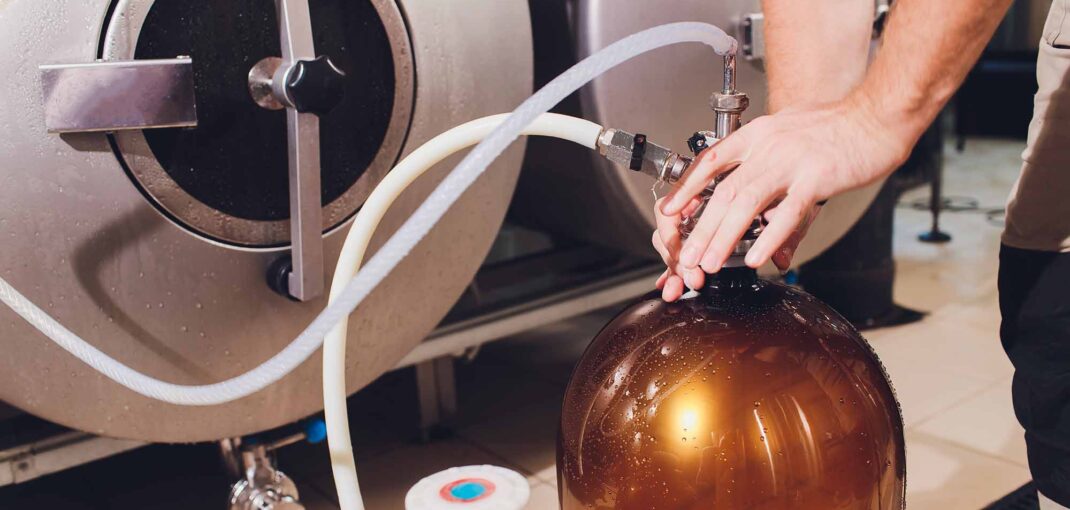
In an establishment that sells draft beer, there are mixed gas solutions for draft beer systems that are blended with nitrogen. The CO2 ensures that the beer coming out of the dispenser is properly carbonated. It also works to push the beer out from the keg, through the cooler and out the tap.
In nitrogen generator systems, like with cold brew drinks, kombucha and other sparkling beverages, extra equipment is used to create visual effects and creamy textures.
In all cases, a properly operational and connected CO2 is necessary to meet customer and establishment expectations for beverage outcomes.
Signs Your CO2 Tank Needs to be Replaced
CO2 tanks hold a finite amount of CO2, held within the confines of the tank. In other words, the tank is the source, not simply a stopping point from an outside source to the tap. As such, tanks run out and wear out.
Every worker in the establishment should learn to recognize the signs that a CO2 tank needs to be replaced. Proactively monitoring CO2 tanks rather than waiting for obvious drops in product quality can ensure that unexpectedly running out of CO2 happens much less often.
Low-Pressure Gauge Readings
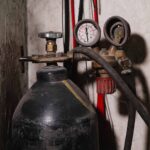
A near constant pressure is maintained inside a CO2 tank. If the gauge indicates low pressure, it means the CO2 is almost gone. When the gauge gets to this point, the tank will need replacement very soon.
Flat Fountain Beverages
When the pressure inside the CO2 tank drops, there isn’t enough to push CO2 into the liquid. That equates to less fizz in the drink. First, you’ll notice less. Then, the drinks will be completely flat.
Inferior Beer Pours
A CO2 tank on its way to needing replacement will show itself with bad beer pours. Maybe the foam is coming out in dribbles, or the pour is slow and weak. This means a new tank should be installed.
Excessive Foaming
Sometimes, the opposite happens. You can get too much foam. This might surprise you since you want the foam, just not so much of it. This means the pressure is unstable inside the CO2 tank, and it should be replaced.
Reduced System Pressure
A tank that’s getting low on CO2 may affect the whole system. Secondary regulators further down the line (feeding individual beer faucets, the carbonator, etc.) all see reduced input pressure simultaneously, since they’re all pulling from the same diminishing source.
Complete Loss of Beverage Dispensing Capability
When the tank is out, it’s out. If you suddenly can’t dispense anything, including flat drinks, it’s a clear sign that the CO2 tank needs replacement.
Remember, all of these scenarios can be prevented by keeping a watchful eye on the tank and the products being dispensed.
Safety Precautions Before Changing a CO2 Tank
Knowing how to change a CO2 tank for soda or beer isn’t the only important information. No urgency in an establishment is more important than prioritizing safety. A great deal of pressure is inside that innocuous tank, so go slow and keep these safety precautions in mind.
Ensure the Area Is Well-Ventilated
CO2 displaces oxygen. In high enough concentrations, it can create an environment where there isn’t enough oxygen for your body and brain. If the area isn’t well ventilated and there’s a leak, you could experience dizziness, confusion, unconsciousness or even demise. Like some other gases, CO2 is odorless and colorless.
Don’t change tanks in enclosed spaces like storage closets, etc. There should be some kind of exhaust system, or something that makes the air flow freely. Even an open window or a large fan helps.
Properly Secure the Cylinders
A CO2 cylinder in use and in storage should be properly secured. If the cylinder falls or the valve gets damaged, it creates a hazard. If a valve breaks off a top-heavy, unsecured cylinder, the escaping high-pressure gas can turn the tank into a projectile capable of causing serious personal injury or property damage.
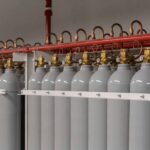
Use chains or straps to secure tanks in storage. No tank should just be left freestanding, even for a little bit. Tanks should always be used and stored in a fully upright position. Finally, CO2 canisters come with a safety cap. This should always be in place when the tank is not connected to the system.
Wear PPE When Appropriate
A whole body getup isn’t necessary to change a CO2 tank. Though some common safety precautions include wearing goggles to protect eyes from sudden gas release or projectile when working with fittings, regulators or connections that may have residual pressure.
Closed-toe shoes will protect feet in case the tank happens to fall. Full tanks can weigh over 50 pounds. If a leak is involved, gloves make sense. Escaping CO2 expands and cools rapidly, and direct contact with a leak or an open valve can cause frostbite-like cold burns.
How to Change a CO2 Tank: Step-by-Step
Step 1: Shut Off the CO2 Supply
- Locate the valve at the top of the tank.
- Turn it fully clockwise just until snug; don’t force it.
- Confirm flow has stopped by watching the pressure gauge or listening for hissing.
Step 2: Release Remaining Pressure
- Slowly bleed residual pressure from the line using the regulator’s release valve or bleed screw.
- Follow your equipment manufacturer’s specific instructions for this step.
- Never skip this; disconnecting a pressurized regulator can damage it or cause injury.
Step 3: Disconnect the Regulator
- Unscrew the regulator from the tank valve, turning slowly.
- Inspect the connection point and washer for wear, cracks or damage.
- Handle the regulator gently; avoid dropping or knocking it against hard surfaces.
Step 4: Remove the Empty Tank
- Lift with your legs; use a hand truck if needed.
- Keep the tank upright and secured while moving it.
- Store the empty cylinder, capped and secured, away from heat sources.
Step 5: Position the New Tank
- Place the tank upright in its designated spot.
- Secure it immediately with a chain or strap.
- Verify it’s stable and won’t tip before proceeding.
Step 6: Reconnect the Regulator
- Align the regulator with the tank valve threading.
- Check that the washer/seal is present, intact and properly seated.
- Hand-tighten first, then make it snug with a wrench; don’t overtighten.
Step 7: Slowly Open the Valve
- Turn the tank valve open gradually, not all at once.
- Watch the pressure gauge climb steadily to the expected range.
- Confirm the system pressurizes normally before resuming service.
Step 8: Check for Leaks
- Apply a leak-detection solution (soapy water) to fittings and connections.
- Watch for bubbles, hissing or frost, which indicate a leak.
- Monitor pressure for a few minutes to confirm stability before putting the system back into service.
Broward Nelson Provides Reliable CO2 Delivery and Support
Broward Nelson offers CO2 tank delivery, CO2 refills, tank exchange and full beverage gas systems support, along with installation assistance and troubleshooting when issues arise. As a family-owned business operating since 1965, now in its third generation, Broward Nelson brings decades of hands-on industry experience to every account.
A fleet of more than 30 trucks supports same-day and next-day delivery options, helping businesses avoid service interruptions. Combined with knowledgeable customer support, Broward Nelson serves as a long-term resource for restaurants, bars and beverage operations of any size.
Contact Broward Nelson for Commercial CO2 Services
Contact Broward Nelson for commercial CO2 delivery services, tank exchanges, beverage gas delivery, equipment support and emergency service when you need it most. With fast response times, deep industry expertise, and a personalized approach to customer service, Broward Nelson is ready to help keep your beverage systems running reliably.
Reach out today to speak directly with a member of the Broward Nelson team.