
CO₂ Tank Sizes: A Practical Guide for Beverage and Industrial Use
Whether you’re running a kegerator, bar, restaurant, brewery, or light industrial setup, choosing the right CO₂ tank comes down to having enough capacity without overspending or creating storage hassles. The best size depends on how much CO₂ you use, the space you have, how easy the tank is to handle, and where you can get it refilled, not just which tank is the biggest.
A Quick Look at CO₂ Tank Sizes
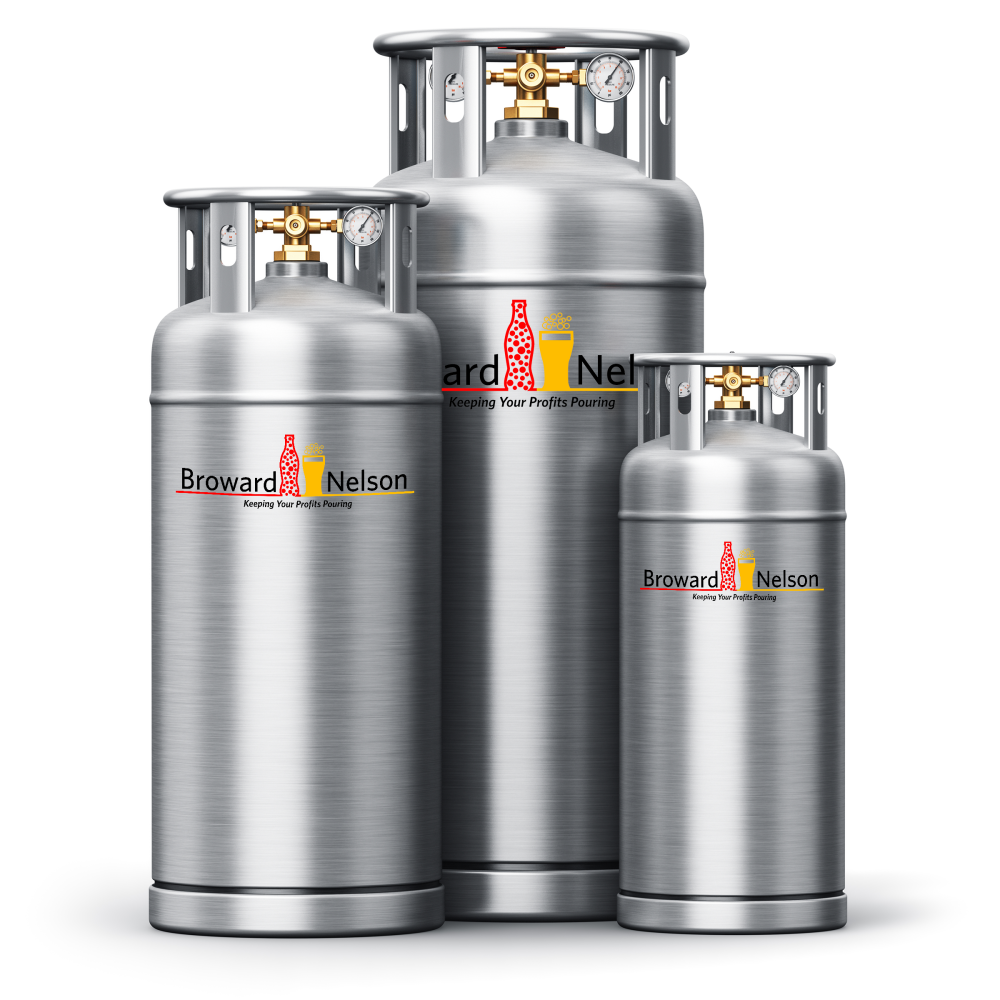
CO₂ tanks are labeled by how much carbon dioxide they hold—not by the tank’s total weight or size. So, a “20 lb. tank” holds about 20 pounds of CO₂ when full.
Common sizes include 5, 10, 20, and 50 pounds. You might also see “water volume” listed in the specs, but that just refers to the tank’s internal capacity—not how much CO₂ it holds.
A 5 lb. tank is a good fit for home kegerators or mobile setups. A 10 lb. tank lasts longer but is still fairly easy to move. Twenty-pound tanks are common for commercial use, while 50 lb. tanks are better for busy, stationary setups.
Common CO2 Cylinder Sizes and Labels
Dimensions and tare weights vary by manufacturer, so confirm the exact model before designing a cabinet or storage rack. Typical aluminum-cylinder specifications are:
- 5 lb. C02 Capacity
- 5.25 × 18 in.
- 7–8 lb. (approx. empty weight)
- Home kegerator, portable service
- 10 lb. C02 Capacity
- 7 × 20–21 in.
- 14–15 lb. (approx. empty weight)
- Small restaurant, multiple taps
- 20 Ib. C02 Capacity
- 8 x 27-28 in.
- 25-30 Ib. (approx. empty weight)
- Bar or restaurant
- 50 Ib. C02 Capacity
- 8.5 x 47 in.
- 49-60 Ib. (approx. empty weight)
- Brewery or high-volume operation
The cylinder’s shoulder or top should be stamped with the DOT rating, service pressure, serial number, and original test date. Later hydro-test markings usually include the month, year, and tester’s ID. Don’t rely on paint color alone to identify the gas.
Most U.S. beverage CO₂ cylinders use a CGA-320 valve. Make sure your regulator has the right connection and is rated for CO₂—never force a fitting or use an incompatible adapter.
Steel vs. Aluminum CO2 Tanks
Steel tanks are tough, affordable, and great for everyday commercial use. The tradeoff is that they’re heavier and can rust if the finish gets scratched or damaged. If the tank will mostly stay in a back room, steel is usually a solid choice.
Aluminum tanks cost a little more, but they’re lighter, easier to carry, and won’t rust. They’re a better fit for mobile setups, frequent tank changes, or humid and coastal areas.
Estimating CO2 Usage
A well-maintained kegerator typically uses about 0.5–1 pound of CO2 to dispense a standard 15.5-gallon half-barrel keg. In theory, a 5 lb. tank can handle around five to ten kegs, but planning for five to seven is more realistic once you account for purging, pressure adjustments, and small gas losses.
As a general estimate:
- A 5 lb. tank handles about 5–10 kegs.
- A 10 lb. tank handles about 10–20 kegs.
- A 20 lb. tank handles about 20–40 kegs.
You’ll use more CO2 if you’re force-carbonating, aiming for higher carbonation, running long beverage lines, purging often, or dealing with leaks. Warmer beverages also need more pressure than colder ones.
Sizing Recommendations by Business Type
For a home setup or single tap kegerator, a 5 lb. cylinder is usually the most practical starting point because it fits easily inside most cabinets and is simple to move.
A small café or restaurant will often find a 10 lb. cylinder to be a good compromise. It provides a moderate reserve without becoming difficult to handle or store.
A high-volume bar should generally begin with a 20 lb. cylinder and keep a secured backup available. The larger capacity reduces exchanges and supports better operating continuity during busy periods.
Production breweries commonly require a 50 lb. cylinder, a manifolded cylinder bank, or a bulk system. The right choice depends on consumption, available space, and access to scheduled refill service or bulk delivery.
Industrial processes typically need an engineered cylinder bank or bulk installation. System sizing should account for flow rate, pressure, duty cycle, delivery reliability, and applicable safety codes.
Safety, Storage, and Regulations
CO₂ isn’t flammable, but it’s stored under high pressure and can replace oxygen. Keep cylinders upright and secured, protect the valves, use a cylinder cart, and store them in a cool, dry, well-ventilated area.
Install CO₂ monitors and alarms in enclosed spaces, coolers, and basements. If an alarm sounds, staff should evacuate and follow emergency procedures—never enter to investigate.
Follow DOT, OSHA, and local fire-code requirements. Many CO₂ cylinders must be requalified every five years, though timing depends on the cylinder and test type. Don’t fill cylinders that are overdue, damaged, corroded, or improperly marked.
FAQs About CO2 Tanks and Cylinders
Start by estimating how much CO₂ you’ll use and how often you’re comfortable getting it refilled. Add an extra 10–15% as a cushion, then make sure the tank will fit your space and that you can safely handle it when full.
For basic draft service, a 5 lb. tank usually handles around 5–10 half-barrel kegs, a 10 lb. tank handles 10–20, and a 20 lb. tank handles 20–40. Keep in mind that carbonation, purging, leaks, and long draft lines can make you go through CO₂ faster.
Yes. Refillable DOT cylinders must be tested within the required requalification period. Always use a DOT-authorized requalifier and never fill a cylinder that’s overdue for testing or visibly damaged.
Choosing your CO₂ tank based on actual demand, and making sure it’s stored safely and serviced regularly, can help prevent downtime, cut unnecessary delivery costs, and reduce safety risks.